When a person is careful about saying truth then he receives protection for his Shmiras Habris.
(Sefer Hamidos, Emes 24)
6.16.2011
Holiness of Yisroel
Fortunate are we that Hashem was very good to us and and that we merited the Holiness of being Jewish.
(Sichos Haran 11)
(Sichos Haran 11)
6.15.2011
Even the Wicked Are Filled With Remorse
Wicked people are also filled with thoughts of remorse and yet they do not even know what thoughts of repentance are. However this itself that they strengthen themselves in their wrong doing, is a direct result of their remorse. When thoughts of remorse enter their minds they strengthen themselves and try harder to do evil.
This can be compared to two men fighting. When one sees that he is being defeated by his companion, he gathers the remainder of his strength and starts fighting with all his might. Here too, when the evil sees a little good awakening it strengthens itself even more.
This is a big rule in serving Hashem. Every person according to their level and the amount of effort they are using to enter into the service of Hashem, according to this the evil inclination strengthens itself against them. One has to be wise about this and come up with plans how to wage war against the evil, each time it comes back and restrengthens itself. Fortunate is the one who merits to win this war.
(Sichos Haran 10) Read more:
Tzadik Yesod Olam
Rebbe Nachman of Breslov on Shmiras Habris
6.14.2011
Learn Through It Fast
When a person studies topics related to violence or disaster such as the laws of mourning, he should not dwell much in these places. He should not ponder and think too deeply into these sections of Torah, since thoughts of the mind are very powerful and influential. Therefore when a person reaches these sections of Torah, he should study and pass through them as quickly as possible.
[Editors note: Once we have seen that there are parts of Torah that can be studied very quickly, the same probably applies to the Laws of Ishus, Tznius, Nidah etc. for people that have not yet purified their minds and can not control their thoughts.]
(Sichos Haran 8)
6.11.2011
Talk to Hashem Like a Child
All Jews are called children of Hashem. It is therefore fitting for us to talk and express all our suffering in front of Him, like a child complaining in front of his Father.
(Sichos Haran 7)
(Sichos Haran 7)
Confusing Thoughts
When a person gets confounded by confusing thoughts, if he strengthens himself and tries to perform the best he can under the circumstances set by his mind, often Hashem will send him supportive thoughts afterwards.
(Sichos Haran 7)
6.10.2011
Children of Hashem
Even if it appears to a person that according to his actions he is not considered a son of Hashem, he must still remember that Hashem called us his children regardless of how we act. Even if Hashem is now exiling you from being a son, let him do as he wishes but you have to do your part and still try to act like a son.
(Sichos Haran 7)
6.06.2011
Empty Desires and Lust
Lusts of the physical world can be compared to rays of light. When they enter the home, sunrays appear like pillars due to the radiance of the sun. It appears that one can grab these pillars of light. Yet when they are grabbed and grasped, there is nothing in the hand. All the desires and lusts of this world are exactly like this.
(Sichos Haran 6)
(Sichos Haran 6)
6.04.2011
An Empty Yetzer Hara
The Yetzer Hara is comparable to a man who runs amongst a crowd of people with his hand closed and no one knows what it contains. He deceives each person and asks him to guess what he is holding. To each person it appears that he is holding what he desires. Therefore everyone starts chasing after this man, since each person believes that his hand contains what he desires. In the end this man opens his hand and it is empty.
This is exactly how the Yetzer Hara deceives the entire world and gets everyone to chase after him. He deceives each person making him believe that his hand contains what he desires, each person according to his personal foolishness and lust. At the end the Yetzer Hara opens up his hand and it is completely empty since there is no one that can completely satisfy his lusts by following his Yetzer Hara.
This is exactly how the Yetzer Hara deceives the entire world and gets everyone to chase after him. He deceives each person making him believe that his hand contains what he desires, each person according to his personal foolishness and lust. At the end the Yetzer Hara opens up his hand and it is completely empty since there is no one that can completely satisfy his lusts by following his Yetzer Hara.
(Sichos Haran 6)
6.03.2011
Philosophy is Very Damaging
It is very damaging to learn any form of philosophy since it causes many questions and confusion. This then weaken a persons fear of punishment and in turn support his natural tendency to follow his desires and evil inclination. Therefore you will never find any person that became truly righteous and G-d fearing from studying books based on philosophy. Although these books do occasionally discus good traits etc., still their damage far outweighs any benefits they might have since they greatly confuse the mind of a person.
(Sichos Haran 5)
6.02.2011
Fear of Punishment
A person should serves Hashem mainly from fear. Even Tzadikim mostly serve Hashem out of fear and those that constantly serve Hashem from love are few. Fear of punishment is the main element of fear. There is a higher level of fear called Fear of His Awesomeness, that is to fear Hashem due to His tremendous greatness and power. Since not everyone merits this, the main service of Hashem for most people has to be based on fear of being punished for doing wrong. Every person is born with evil and it is their natural tendency to be pulled after this evil, that is after the desires and lusts of the physical world. It is only because fear of punishment that a person breaks his lusts and desires and starts entering into the service of Hashem.
(Sichos Haran 5)
6.01.2011
Teshuvah is High Even Above Torah
Even when one falls tremendously to wherever he falls, may the Merciful One save us, it is forbidden for him to give up on himself. Teshuvah is high, even above Torah. Therefore despair does not exist in this world. If a person merits all his sins we be transformed into merits. It is a rule, that from all falls and stumblings that exists in reality, one can easily return to Hashem since there is no boundaries to His greatness. One main thing that everything is dependent on is that a person should not give up from crying out to Hashem, begging and pleading to Him at all times.
(Sichos Haran 3)
(Sichos Haran 3)
5.31.2011
Hashem's Greatness
It is impossible to relate to others your perception of Hashems greatness, since it is dependent on what each person perceives in his own heart. Even to himself, a person can not relate the perception of Hashems greatness that he experienced yesterday, since it changes from day to day.
(Sichos Haran 1)
(Sichos Haran 1)
3.06.2009

1.16.2009
Tikkun Mem Ches
Tikkun Mem Ches (48) in the Tikkunay Zohar
A Wonderous Segulah to rectify oneself and to rectify Nefesh Ruach and Neshama. Culled from the Holy ARIZALs works to be said every day after prayers. Tikun Mem Ches from the Tikunei Zohar has the Segulah to bring that which is precious and holy out of what has fallen into spiritual darkness and to rectify the sins related to the Bris Kodesh. Whomever says it will be worthy of many wonderous things relating to body and soul.
Especially useful for Shovavim
Especially useful for Shovavim
Tikkun Klali Song
Just in time for Shovavim
The Tikkun Klali by Erez Yechiel
Can now be downloaded on the Na Nach Music Site
The Tikkun Klali by Erez Yechiel
Can now be downloaded on the Na Nach Music Site
1.13.2009
Tikkun Chatzot
New on Bris Kodesh Site
Tikkun Chatzot - Each and every Jew should rise each and every night to mourn over the destruction of the Bais Hamikdosh
Tikkun Chatzot - Each and every Jew should rise each and every night to mourn over the destruction of the Bais Hamikdosh
12.05.2008
Pidyon Haben
Alufim go to a Pidyon Haben which the Holy Ari revealed to be equivalent to Pay Daled tanasim.
11.22.2008
11.19.2008

11.17.2008
Hillulah of Saba Yisroel
Alufim go to the Kever of the Holy Tzadik Rebbe Yisroel Dov Odeser and recite the Tikun Haklali 3 times.
11.15.2008
Choni Hamagel
Alufim go to Kever Choni Hamagel on Thur night, time of Yesod and recite Tikkunay Zohar.
Rebbe Yosi ben Kisma
Alufim go to the Kever of Rebbe Yosi ben Kisma, recite Tikkun Klali and do Tikkunim to rectify Tavas Mamon.
Uman Rosh Hashana
Alufim go to Rabbanue and spend a lot of time doing vidoy devarim and recite the Tikkun Haklali many times.
9.09.2008
Elul
Alufim go to Kever Rebbe Shimon bar Yochi and recite the prayer of Rebbe Nason for the Rashbi as well as the Tikkun Haklali.
Then Alufim go to the Mayan of Shmaya and Avtalyon in Safsufa and do Chi immersions.
Alufim then go to the location of the Iddra Rabba and do Tikkunim.
Then Alufim go to the Mayan of Shmaya and Avtalyon in Safsufa and do Chi immersions.
Alufim then go to the location of the Iddra Rabba and do Tikkunim.
8.29.2008
To G775 whos email was not working
Rebbe Nachman taught that going to the Mikva will not harm you.
You should not let anything stand in your way, go to the Mivah every day no matter what.
Even if your rash temporally gets worse, ignore and keep on going to the Mikvah.
If you make a commitment to not look or touch your bris or the surrounding areas, it will become a lot easier for you to be Shomer Habris.
Remember the we are very lucky in this generation that we already have the amazing teaching of the holy Tzadik Rebbe Nachman of Brelov revealed in the world. His teaching are a wondrous cure for every type of possible situation. Try as hard as you can to learn the books of Rebbe Nachman of Breslov and follow his advice.
Be strong,
Dun
Tzfat
You should not let anything stand in your way, go to the Mivah every day no matter what.
Even if your rash temporally gets worse, ignore and keep on going to the Mikvah.
If you make a commitment to not look or touch your bris or the surrounding areas, it will become a lot easier for you to be Shomer Habris.
Remember the we are very lucky in this generation that we already have the amazing teaching of the holy Tzadik Rebbe Nachman of Brelov revealed in the world. His teaching are a wondrous cure for every type of possible situation. Try as hard as you can to learn the books of Rebbe Nachman of Breslov and follow his advice.
Be strong,
Dun
Tzfat
8.15.2008
Interesting Clip
This clip talks about the severity and punishment of Pgam Habris. Also in the end we see that the person was saved because he did Hafatza on Rebbe Nachmans Sefarim.
Shulchon Aruch by the Mechaber
Alufay Azus Dkedusha go to the kever of the Mechaber Rebbe Yosef Karo and make a siyum on Ahrach Chaim.
Hafatza In Yerushalim
Two of our Mafitzim went into most of the American yeshivos in Yerushalim and gave out hundreds of the "You Shall Be Holy" Tikkun Klalis.
The Yeshivas included
brisk, mir, toras moshe, ohr sameach, mayanote.
The Yeshivas included
brisk, mir, toras moshe, ohr sameach, mayanote.
8.08.2008
THE SADDEST DAY
THE SADDEST DAY
By Rabbi Arye Kaplan ZT"L
Reprinted with permission from Moziem Publishing Corp
The ninth of Av, Tisha B'Av, is the saddest day of the Jewish year. The Talmud describes it as a day that is set aside for tragedy. In both ancient and modern times, the very words "Tisha B'Av" have become synonymous with a day of gloom and mourning.
The story is told in the Book of Numbers. The Jewish people were about to enter the Promised Land, the land of Canaan. Despite the overwhelming odds, they had faith in God's ability to deliver the land into their hands. Almost as a formality, they sent spies to look over the land, to report to the people about the wonderful land God was giving them.
According to tradition, the story of Tisha B'Av began 3,276 years ago, eighteen months after the exodus from Egypt. Moses sent out twelve spies and charged them to examine the land:
See what kind of land it is. Are the people who live there strong or weak, few or many? Is the inhabited area good or bad? Are the cities where they live open or fortified? Is the soil rich or weak? Does the land have trees or not? (Numbers 12:18-20)
The twelve spies traveled through the land for forty days, and then brought back their report. The result was devastating. After seeing the mighty people and the heavily fortified cities of Canaan, their faith had been weakened. The spies claimed that:
The people living in the land are aggressive, and the cities are large and well fortified.... We cannot go forward against those people! ... They are too strong for us! (Numbers 13:28-31)
Such talk quickly weakened the newly acquired faith of the Jewish people. Their trust in God was shaken, and they doubted His ability to lead them to a certain victory. We find them in despair, lamenting the terrible fate which awaited them at the hands of the savage Canaanites: "The entire community raised a hubbub and began to shout. That night, the people wept." (ibid.,14:1).
God punished the people for this loss of faith, decreeing that they would not enter the land, but would wander in the desert for forty years, a year for each day that the spies tarried in the land of Canaan. Only their children would live to enter the Promised Land.
But there was more. For the senseless weeping and wailing, at a time when there should have been trust and faith, God decreed: "This evening you wept in vain. I will proclaim this day a day of weeping for all future generations." The Talmud tells us that this decree was sealed on the ninth day of the Hebrew month of Av — on Tisha B'Av (Ta'anit 29a).
So began the tradition of Tisha B'Av. The forty years passed quickly, and the Jewish people conquered their homeland. Eventually, King Solomon built the Temple in Jerusalem, the focal point of all Jewish life and worship. Israel became an important political power, and began to ape the customs of her neighbors. Her faith again faltered and waned. Rather than an alliance with God, Israel trusted in her alliance with Egypt. The day of reckoning, the day of lamentation, dormant for 725 years— suddenly became manifest. On the ninth of Av, in the year 586 B.C.E., the Temple, the symbol of Israel's glory, the mark of God's presence in their midst, was reduced to rubble.
On that day Nebuzaradan, general of Nebuchadnezzar's Babylonian armies, came to Jerusalem:
And he burnt the house of the Lord, and the kingʹs palace, and all the houses of Jerusalem, every great manʹs house, he burnt with fire. Then, all the army of the Chaldeans that were with the general broke down the walls of Jerusalem, round about. And the rest of the people that were left in the city.. Nebuzaradan the general lead away into exile. Il Kings 25:9
The period of exile passed, and seventy years later the Temple was rebuilt, in the days of Ezra and Nechemiah. Even under the domination of the Greeks and Romans, the Jewish nation prospered. Jewish influence was to be found everywhere, in every field of endeavor, from philosophy to finance. At the height of their influence, it is estimated that there were over three million Romans who had converted to Judaism, so impressed were they with this tiny but prominent nation. But again, success went to the heads of the Jewish leaders, and faith in God became something to be ridiculed, a political tool to control the ignorant masses.
The upper class Jews were busy wending their way into society, a place where the traditions of their ancestors were of little use. The day of Tisha B'Av was again forgotten, as was its lesson.
656 years passed, until, in the year 70 C.E., disaster struck again. The Second Temple, the glory of Jerusalem, was destroyed by Titus the Roman. This time, Jerusalem itself was laid waste, her inhabitants put to the sword. An observer wrote that "blood flowed through the streets of Jerusalem like rivers." The tragedy of Tisha B'Av had come to pass.
But the tragedy did not abate with the destruction of Jerusalem. Blow after blow fell on Tisha B'Av, hammer blows that sealed the lid of the Jewish exile for 1,800 years. The last revolt of the Jews, led by Bar Kochba, was doomed with the destruction of Betar, their stronghold, on Tisha B'Av in the year 135. As a further retribution, the Roman procurator, Turnus Rufus, ploughed over the site of the Temple, obliterating every trace of the glory of Israel, fulfilling the prophesy of Jeremiah: "Zion shall be plowed into a field" (Jeremiah 26:18). This also happened on Tisha B'Av.
The exile continued. Once again the Jews were without a homeland, scattered throughout Asia, North Africa, and Europe. One of the most prominent Jewish communities was that in Spain. This era was known as The Golden Age, for Jews were given the same legal rights as Christians, and they rose to the highest social and financial positions. They became part of the intellectual elite as well, providing Spain with her finest thinkers and writers. It became so easy to forget, so easy to ignore their humble beginnings, an ancient faith, a venerable tradition. Then calamity struck: Jews were no longer welcome! The Spanish Inquisition persecuted the Jews as both heretics and infidels. The final blow was exile: all Jews were ordered to leave Spain under pain of death. The Hebrew date was — the Ninth of Av.
The lesson was to be repeated again in our own times Jewish life again reached a golden age, this time Germany. Here again, Jews attained the highest social and political status. In science and medicine, Jewish bred forgetfulness and neglect of a 4,000 year old heritage, ignorance of a promise and a faith. The "German Jew" became 200 percent German, and the Bible and prayer book were discarded in favor of Goethe and Geiger. What religious leadership still existed seemed mainly occupied in making a gracious exit from the world.
In this exciting world, there was no place for the "old fashioned" Synagogue Jew. The Sabbath Jew gave way to the market Jew, to the university Jew. The modern generation looked upon the God of their fathers as an ineffectual remnant of the ghetto. "God has grown old, He is powerless" — or so they thought.
Hitler was to teach them differently. With nothing less than miraculous precision, the drama unfolded: the persecutions, the segregation, the ghetto, the concentration camp, and then the Final Solution — "Judenreihn," the extermination of all Jews.
The stage for the Final Solution was the concentration camp of Auschwitz, where the most modern facilities for murder in the history of mankind had been constructed. Gas chambers snuffed out the lives of 800 people at a time, crematoria disposed of the bodies just as quickly, while factories rendered the fats of human beings into bars of soap. Altogether, close to 2 million Jews were slaughtered there. The gas chambers of Auschwitz were opened on July 23, 1942; the Hebrew date- the ninth of Av — Tisha B'Av.
What do we learn from Tisha B'Av? What is the lesson that rings like cold steel throughout the ages? It is that we, as Jews, are God's chosen people, and as such, have an obligation. There is no room for forgetfulness, no place for complacency. Tisha B'Av teaches us-that the alternative to full Jewish life is isolation & desolation; that the alternative to God – is destruction!
In every generation where Jews have tried to forget that they were Jews, in every age where they have tried to throw aside all tradition, where they have attempted to forget their Creator, the lesson has been re-taught. We have had many teachers: Nebuchadnezzar, Titus, Turnus Rufus, King Ferdinand and the Inquisitors, and Adolph Hitler. We have had many teachers, but have we learned the lesson?
Here in the United States, the Jews are living in another Golden Age. We live in a nation that has never known organized pogroms and persecutions against our people. Jews have achieved positions of prominence in all spheres, even rising to the highest levels of politics and government. Close to half of the Jews in the world live in the United States, and enjoy the highest standard of living and security in our history.
But American Jews are also the most complacent Jews who have ever lived. No matter what anybody may preach, no matter what lessons history has taught us, we all know that "it can't happen here."
Our Constitution gives us too many guarantees, our government is too stable, our sense of fair play is too egalitarian, for any great persecution to take place. It seems obvious that, barring any great national catastrophe, we as Jews can remain secure in the United States. However, can our Constitution, our government, or our leaders, give us any guarantee that there will not be some great upheaval in the near or distant future? In the final analysis, can we depend on the good will of man? Have we any hope other than our Father in Heaven?
On July 15, 1945, less than fifty years ago, an event occurred that changed the shape of history as we know it. At 5:30 in the morning, over a New Mexico desert, mankind created a new, awesome force, in the explosion of the first atomic bomb. Despite the frightful power unleashed, atomic energy was still a benign force. It was not until three days later that President Truman, in a top secret meeting, decided to use this weapon against human beings. The fateful decision was made on July 19, 1945. The Hebrew date: the ninth of Av — Tisha B'Av.
Many papers and books have speculated about the aftermath of a nuclear war. After a limited nuclear war, civilization might be able to resume. But has anyone speculated on the fate of the Jew? Assuming that enough people were left to continue some semblance of civilization, what would be the position of the Jew? I shudder to think of it. Every catastrophe demands a scapegoat, and the Jews have been scapegoats for centuries. Who else would be left to blame for this disaster — if not the Jews? It was a Jew — Albert Einstein — who first conceived the theory of the atomic bomb. It was a Jew — Robert Oppenheimer — who was the father of the atomic bomb. It was a Jew — Edward Teller — who fathered the hydrogen bomb. Whatever calamities would follow a nuclear war, the disaster to the Jew would be fifty-fold. Democratic ideals would evaporate, and we would be privileged to assume our traditional role —as the scapegoat.
Tisha B'Av has been observed throughout all generations as a reminder not to be complacent, not to forget. After the destruction of Jerusalem and the First Temple, people were bewildered. They asked, "How could it all have happened?" The Book of Lamentations begins by asking how:
ʺHow does she now sit solitary? The city that was full of people has become like a widow. She that was so great among the nations, a princess among states, has become a mere vassal.ʺ Lamentations 1:1
When it is too late, we can always ask, "How did it all happen?" But the wise man works to avoid tragedy. History has shown us, again and again, that God will not let the Jewish people forget their identity or their destiny. It has taught us that: "complacency always precedes calamity."
Many years ago, I heard the great Chassidic Rabbi of Klauseuberg, Rabbi Yekutiel Halberstam, remark that: in America it is very easy to be a Jew, but very difficult to want to be a Jew. The chains of materialism and conformity pull us in two directions away from our heritage. But lest we forget our identity in the midst of material comfort, let us remember the lesson of King Solomon. Our sages tell us that in the midst of all his glory, King Solomon wore a ring inscribed with the words: "Gam zo ya'avor —this too shall pass away."
Material wealth and power are here today — gone tomorrow, but faith in God is eternal. We have nothing and no one to lean upon except— Our Father in Heaven.
We pray that God will spare us from all evil and calamity, and that He will instill in us the faith of our fathers and the fortitude of our ancestors.
Cause us to return to You, O Lord, and we well return (unto you). Renew our days as of old! Lamentations 5:21.
Excerpt from Rabbi Kaplan's Book "Faces & Facets" by Moziem Publishing Corp. Rabbi Kaplan taught these words over thirty years ago- His farseeing insight is uncannily pertinent in our current-day situation.
For this and other publications of Rabbi Kaplan zt"l contact Mozaim at 718-853-0525
The story is told in the Book of Numbers. The Jewish people were about to enter the Promised Land, the land of Canaan. Despite the overwhelming odds, they had faith in God's ability to deliver the land into their hands. Almost as a formality, they sent spies to look over the land, to report to the people about the wonderful land God was giving them.
According to tradition, the story of Tisha B'Av began 3,276 years ago, eighteen months after the exodus from Egypt. Moses sent out twelve spies and charged them to examine the land:
See what kind of land it is. Are the people who live there strong or weak, few or many? Is the inhabited area good or bad? Are the cities where they live open or fortified? Is the soil rich or weak? Does the land have trees or not? (Numbers 12:18-20)
The twelve spies traveled through the land for forty days, and then brought back their report. The result was devastating. After seeing the mighty people and the heavily fortified cities of Canaan, their faith had been weakened. The spies claimed that:
The people living in the land are aggressive, and the cities are large and well fortified.... We cannot go forward against those people! ... They are too strong for us! (Numbers 13:28-31)
Such talk quickly weakened the newly acquired faith of the Jewish people. Their trust in God was shaken, and they doubted His ability to lead them to a certain victory. We find them in despair, lamenting the terrible fate which awaited them at the hands of the savage Canaanites: "The entire community raised a hubbub and began to shout. That night, the people wept." (ibid.,14:1).
God punished the people for this loss of faith, decreeing that they would not enter the land, but would wander in the desert for forty years, a year for each day that the spies tarried in the land of Canaan. Only their children would live to enter the Promised Land.
But there was more. For the senseless weeping and wailing, at a time when there should have been trust and faith, God decreed: "This evening you wept in vain. I will proclaim this day a day of weeping for all future generations." The Talmud tells us that this decree was sealed on the ninth day of the Hebrew month of Av — on Tisha B'Av (Ta'anit 29a).
So began the tradition of Tisha B'Av. The forty years passed quickly, and the Jewish people conquered their homeland. Eventually, King Solomon built the Temple in Jerusalem, the focal point of all Jewish life and worship. Israel became an important political power, and began to ape the customs of her neighbors. Her faith again faltered and waned. Rather than an alliance with God, Israel trusted in her alliance with Egypt. The day of reckoning, the day of lamentation, dormant for 725 years— suddenly became manifest. On the ninth of Av, in the year 586 B.C.E., the Temple, the symbol of Israel's glory, the mark of God's presence in their midst, was reduced to rubble.
On that day Nebuzaradan, general of Nebuchadnezzar's Babylonian armies, came to Jerusalem:
And he burnt the house of the Lord, and the kingʹs palace, and all the houses of Jerusalem, every great manʹs house, he burnt with fire. Then, all the army of the Chaldeans that were with the general broke down the walls of Jerusalem, round about. And the rest of the people that were left in the city.. Nebuzaradan the general lead away into exile. Il Kings 25:9
The period of exile passed, and seventy years later the Temple was rebuilt, in the days of Ezra and Nechemiah. Even under the domination of the Greeks and Romans, the Jewish nation prospered. Jewish influence was to be found everywhere, in every field of endeavor, from philosophy to finance. At the height of their influence, it is estimated that there were over three million Romans who had converted to Judaism, so impressed were they with this tiny but prominent nation. But again, success went to the heads of the Jewish leaders, and faith in God became something to be ridiculed, a political tool to control the ignorant masses.
The upper class Jews were busy wending their way into society, a place where the traditions of their ancestors were of little use. The day of Tisha B'Av was again forgotten, as was its lesson.
656 years passed, until, in the year 70 C.E., disaster struck again. The Second Temple, the glory of Jerusalem, was destroyed by Titus the Roman. This time, Jerusalem itself was laid waste, her inhabitants put to the sword. An observer wrote that "blood flowed through the streets of Jerusalem like rivers." The tragedy of Tisha B'Av had come to pass.
But the tragedy did not abate with the destruction of Jerusalem. Blow after blow fell on Tisha B'Av, hammer blows that sealed the lid of the Jewish exile for 1,800 years. The last revolt of the Jews, led by Bar Kochba, was doomed with the destruction of Betar, their stronghold, on Tisha B'Av in the year 135. As a further retribution, the Roman procurator, Turnus Rufus, ploughed over the site of the Temple, obliterating every trace of the glory of Israel, fulfilling the prophesy of Jeremiah: "Zion shall be plowed into a field" (Jeremiah 26:18). This also happened on Tisha B'Av.
The exile continued. Once again the Jews were without a homeland, scattered throughout Asia, North Africa, and Europe. One of the most prominent Jewish communities was that in Spain. This era was known as The Golden Age, for Jews were given the same legal rights as Christians, and they rose to the highest social and financial positions. They became part of the intellectual elite as well, providing Spain with her finest thinkers and writers. It became so easy to forget, so easy to ignore their humble beginnings, an ancient faith, a venerable tradition. Then calamity struck: Jews were no longer welcome! The Spanish Inquisition persecuted the Jews as both heretics and infidels. The final blow was exile: all Jews were ordered to leave Spain under pain of death. The Hebrew date was — the Ninth of Av.
The lesson was to be repeated again in our own times Jewish life again reached a golden age, this time Germany. Here again, Jews attained the highest social and political status. In science and medicine, Jewish bred forgetfulness and neglect of a 4,000 year old heritage, ignorance of a promise and a faith. The "German Jew" became 200 percent German, and the Bible and prayer book were discarded in favor of Goethe and Geiger. What religious leadership still existed seemed mainly occupied in making a gracious exit from the world.
In this exciting world, there was no place for the "old fashioned" Synagogue Jew. The Sabbath Jew gave way to the market Jew, to the university Jew. The modern generation looked upon the God of their fathers as an ineffectual remnant of the ghetto. "God has grown old, He is powerless" — or so they thought.
Hitler was to teach them differently. With nothing less than miraculous precision, the drama unfolded: the persecutions, the segregation, the ghetto, the concentration camp, and then the Final Solution — "Judenreihn," the extermination of all Jews.
The stage for the Final Solution was the concentration camp of Auschwitz, where the most modern facilities for murder in the history of mankind had been constructed. Gas chambers snuffed out the lives of 800 people at a time, crematoria disposed of the bodies just as quickly, while factories rendered the fats of human beings into bars of soap. Altogether, close to 2 million Jews were slaughtered there. The gas chambers of Auschwitz were opened on July 23, 1942; the Hebrew date- the ninth of Av — Tisha B'Av.
What do we learn from Tisha B'Av? What is the lesson that rings like cold steel throughout the ages? It is that we, as Jews, are God's chosen people, and as such, have an obligation. There is no room for forgetfulness, no place for complacency. Tisha B'Av teaches us-that the alternative to full Jewish life is isolation & desolation; that the alternative to God – is destruction!
In every generation where Jews have tried to forget that they were Jews, in every age where they have tried to throw aside all tradition, where they have attempted to forget their Creator, the lesson has been re-taught. We have had many teachers: Nebuchadnezzar, Titus, Turnus Rufus, King Ferdinand and the Inquisitors, and Adolph Hitler. We have had many teachers, but have we learned the lesson?
Here in the United States, the Jews are living in another Golden Age. We live in a nation that has never known organized pogroms and persecutions against our people. Jews have achieved positions of prominence in all spheres, even rising to the highest levels of politics and government. Close to half of the Jews in the world live in the United States, and enjoy the highest standard of living and security in our history.
But American Jews are also the most complacent Jews who have ever lived. No matter what anybody may preach, no matter what lessons history has taught us, we all know that "it can't happen here."
Our Constitution gives us too many guarantees, our government is too stable, our sense of fair play is too egalitarian, for any great persecution to take place. It seems obvious that, barring any great national catastrophe, we as Jews can remain secure in the United States. However, can our Constitution, our government, or our leaders, give us any guarantee that there will not be some great upheaval in the near or distant future? In the final analysis, can we depend on the good will of man? Have we any hope other than our Father in Heaven?
On July 15, 1945, less than fifty years ago, an event occurred that changed the shape of history as we know it. At 5:30 in the morning, over a New Mexico desert, mankind created a new, awesome force, in the explosion of the first atomic bomb. Despite the frightful power unleashed, atomic energy was still a benign force. It was not until three days later that President Truman, in a top secret meeting, decided to use this weapon against human beings. The fateful decision was made on July 19, 1945. The Hebrew date: the ninth of Av — Tisha B'Av.
Many papers and books have speculated about the aftermath of a nuclear war. After a limited nuclear war, civilization might be able to resume. But has anyone speculated on the fate of the Jew? Assuming that enough people were left to continue some semblance of civilization, what would be the position of the Jew? I shudder to think of it. Every catastrophe demands a scapegoat, and the Jews have been scapegoats for centuries. Who else would be left to blame for this disaster — if not the Jews? It was a Jew — Albert Einstein — who first conceived the theory of the atomic bomb. It was a Jew — Robert Oppenheimer — who was the father of the atomic bomb. It was a Jew — Edward Teller — who fathered the hydrogen bomb. Whatever calamities would follow a nuclear war, the disaster to the Jew would be fifty-fold. Democratic ideals would evaporate, and we would be privileged to assume our traditional role —as the scapegoat.
Tisha B'Av has been observed throughout all generations as a reminder not to be complacent, not to forget. After the destruction of Jerusalem and the First Temple, people were bewildered. They asked, "How could it all have happened?" The Book of Lamentations begins by asking how:
ʺHow does she now sit solitary? The city that was full of people has become like a widow. She that was so great among the nations, a princess among states, has become a mere vassal.ʺ Lamentations 1:1
When it is too late, we can always ask, "How did it all happen?" But the wise man works to avoid tragedy. History has shown us, again and again, that God will not let the Jewish people forget their identity or their destiny. It has taught us that: "complacency always precedes calamity."
Many years ago, I heard the great Chassidic Rabbi of Klauseuberg, Rabbi Yekutiel Halberstam, remark that: in America it is very easy to be a Jew, but very difficult to want to be a Jew. The chains of materialism and conformity pull us in two directions away from our heritage. But lest we forget our identity in the midst of material comfort, let us remember the lesson of King Solomon. Our sages tell us that in the midst of all his glory, King Solomon wore a ring inscribed with the words: "Gam zo ya'avor —this too shall pass away."
Material wealth and power are here today — gone tomorrow, but faith in God is eternal. We have nothing and no one to lean upon except— Our Father in Heaven.
We pray that God will spare us from all evil and calamity, and that He will instill in us the faith of our fathers and the fortitude of our ancestors.
Cause us to return to You, O Lord, and we well return (unto you). Renew our days as of old! Lamentations 5:21.
Excerpt from Rabbi Kaplan's Book "Faces & Facets" by Moziem Publishing Corp. Rabbi Kaplan taught these words over thirty years ago- His farseeing insight is uncannily pertinent in our current-day situation.
For this and other publications of Rabbi Kaplan zt"l contact Mozaim at 718-853-0525
Hillulah of the Holy Ari

Alufim go to the kever of the Holy Tzadik Rebbe Yitzchok Luria, recite the Tikkun Haklali and do Hisbodedute.

Hillulah of the Holy Ramak

Alufay Azus Dkedusha say Tikkun Klali by the Kever of the Holy Kabbalist Rebbe Moshe Cardovero then pray Mincha and do Kabbalas Shobbos.
7.25.2008
7.24.2008
Tikkun Klalis
With Hashems help we were able to send out Tikkun Klalis to all the people that requested them over the last couple months. The list was pilling up and B"H we sent out all the ones in US a couple of days ago.
Reply to "G"
Your email came back with a failed delivery status, here is the reply.....
Shalom,
First of all Hashem loves you and no matter where you are holding things can completely turn around for the good.
Here is what you should do...
1 - Try to say the Tikkun Haklali every day (this simply means to recite Tehilim chapter 16, 32, 41,42, 59, 77, 90, 105, 150
2 - If possible try to go to the Mikvah whenever you get a chance.
3 - Do Hisbodedute for an hour a day, this should probably be your main focus and it can be done anywhere under any conditions. All you have to do is talk to Hashem as if he was your friend, pretend that you have someone next to you and talk to him. You can talk to Hashem about anything, including any specific problems or situations that you might have.
4 - Try to read the books of Rebbe Nachman of Breslov, reading his books causes great healing, even having his books in your room will bring in a spirit of holiness. Rebbe Nachman is the healer of all the later generations, the more of his advice and teachings you will follow the better your life will become.
5 - Try to always be happy to the best of your ability, do not look at the past and at your failings. Every person has some good, instead try searching for the good that you can do. Remember even the smallest act of holiness from you can be very great in the eyes of Hashem given the circumstances that you are under.
Shalom,
First of all Hashem loves you and no matter where you are holding things can completely turn around for the good.
Here is what you should do...
1 - Try to say the Tikkun Haklali every day (this simply means to recite Tehilim chapter 16, 32, 41,42, 59, 77, 90, 105, 150
2 - If possible try to go to the Mikvah whenever you get a chance.
3 - Do Hisbodedute for an hour a day, this should probably be your main focus and it can be done anywhere under any conditions. All you have to do is talk to Hashem as if he was your friend, pretend that you have someone next to you and talk to him. You can talk to Hashem about anything, including any specific problems or situations that you might have.
4 - Try to read the books of Rebbe Nachman of Breslov, reading his books causes great healing, even having his books in your room will bring in a spirit of holiness. Rebbe Nachman is the healer of all the later generations, the more of his advice and teachings you will follow the better your life will become.
5 - Try to always be happy to the best of your ability, do not look at the past and at your failings. Every person has some good, instead try searching for the good that you can do. Remember even the smallest act of holiness from you can be very great in the eyes of Hashem given the circumstances that you are under.
6.29.2008
Hillulah of Yonason ben Uziel
Alufim go to Amuka to the Hillulah of the Holy Tana Yonason ben Uziel and recite the Tikkun Haklali.
Tikkunim in Ain Zeson
Alufim go to the Kever of Rebbe Yehuda bar Elah and do Tikkunim
then Alufim go to the Kever of Rebbe Kurspiday and do Tikkunim
then Alufim go to the Kever of Rebbe Yosi Saragosi and do Tikkunim.
New on the site....
Harav Yosi Saragosi
Rebbe Kurspiday the Tanah
then Alufim go to the Kever of Rebbe Kurspiday and do Tikkunim
then Alufim go to the Kever of Rebbe Yosi Saragosi and do Tikkunim.
New on the site....
Harav Yosi Saragosi
Rebbe Kurspiday the Tanah
Tikun Klali by the Rashbi
Alufim go to the Kever of Rebbe Shimon on the sixth night of the week - yesod and recite the Tikkun Haklali with the prayer of Rebbe Nasson.
6.17.2008
Vidoy by Rebbe Shimon

Alufay Azus Dkedusha go to the Kever of the Tzadik Yesod Olam Rebbe Shimon bar Yochi, recite Tikkun Klali and do Vidoy Devarim.
Alufim also do Hisbodedute by Rebbe Elazer, Rebbe Yitzchok and Rebbe Yeava.
6.16.2008
Siyum by Rebbe Yehoshua
 Alufim imerse in the Ari Mikva then go down to the Kever of the holy Tana Rebbe Yehosua ben Chananya and make a Siyum on Mishna Seder Zeraim.
6.14.2008
Confession by the Ari

Alufim fast and go to the Kever of the Holy Tzadik Yesod Alom Rebbe Yitzchak Luria and do vidoy devarim for two hours.
6.13.2008
Yesod Yosef
The Yesod Yosef fund that has been run and managed by the Alufay Azus Dkedusha for the past five years, will now be open to the general public on the web.
Here is the link to the page where people can make a monetary contribution.
http://www.briskodesh.org/yesod-yosef/
Note: none of our members are recipients of this fund.
Here is the link to the page where people can make a monetary contribution.
http://www.briskodesh.org/yesod-yosef/
Yesod Yosef
- All your money goes to poor families, no fundraiser commission or overhead deducted.
- Money is given out to poor families living in Eretz Yisroel.
- Each family is carefully chosen and many of the fathers are talmidei chachamim.
- Money is given out on Thursday nights. This lines up with the Seferah of Yesod and is a very large Tikkun for Pgam Habris. Additionally it practically ensures that the money will be used for Shabbos.
- Yesod Yosef is a tax exempt organization and can offer tax deductible receipts.
- All families on the fund have children.
- Money is given out in Cash to save recipients from embarrassment and so it can be used for all different types of expenses.
- All money is given out Mattan Bsetter which is the highest level of Tzedaka; we have a number of methods of doing this.
- Each family receives 100 shekel a week ($30 - $23 depending on current worth of dollar) this almost insures that the money will be used for base necessities and not splurged, which might happen if given in a lump sum.
- Periodic checkups are done on each family to see that they are still in need.
- Families are only approved after a number of references have been checked.
Note: none of our members are recipients of this fund.
6.10.2008
Aliyah Lregel
Alufim go to Yerushalim and the Kotel for Shevuos.
At night Alufim go to the Hillulah of Dovid Hamelech
and then immerse in the holy waters of the Shiloach
At night Alufim go to the Hillulah of Dovid Hamelech
and then immerse in the holy waters of the Shiloach
5.28.2008
Lag Baomer
Alufim go to the Hillulah of the Holy Tana Rebbe Shimon bar Yochi and distribute Chi Rotel of Dry Wine.
5.14.2008
4.29.2008
Sod Etzba Elokim
4.13.2008
Shabbos at Rebbe Shimon
 Alufay Azus Dkedusha spend Shabbos by the Tzion of the Holy Tana Rebbe Shimon bar Yochi.
4.11.2008
The Tikkun Haklali
 After many obstacles and tzimzumim, a year of trying and five printers Hashem had mercy on us and allowed us to reprint the "You Shall be Holy Tikkun Haklali"
For a free pamphlet please fill out the form on this page http://www.truekabbalah.org/bris-kodesh/forms/free-pamphlet.htm
Publish Post
for more then 10 copies call 04-699-9145
also new on site:
Tikkun of Sack and Ashes - Sources showing that this is a traditional and important part of Teshuvah.
4.01.2008
2 day fast

Alufim do a 2 day fast. Mincha time of the second day Alufay Azus Dkedusha go to the Abuhov Bet Knesset and recite Tikkun 48 from the Tikkunay Zohar by the aron kodesh containing the holy Torah Scroll written by Rebbe Yitzchock Abuhav, finishing a set of reciting Tikkun Mem Ches 150 times.
3.28.2008
Har Hazasim

Alufay Azus Dkedush go to the Kever of the Holy Kabbalist Rebbe Yehudah Fataya and do the Tikkun of Ana Bkoach.
Alufim also go to the Kever of Rabbi Hersh.
Tikkun Klali by the Saba

Alufim go to the kever of the Sabba, Rebbe Yisroel Ber Odeser and recite the Tikkun Haklali.
Alufim also go do Tikkunim by the Chida and Hrav Yosef Dayan.
Also new on site
Rabbi Aryeh Kaplan
Rebbe Zev Wolf from Matrani
Rebbe Yochanan Hasandlar
Rebbe Yehuda Fataya
Rebbe Chaim Yosef Dovid Azuli the Chida
Beit Knesst Hari Hsfaradi
Bais Knesset Abuhav
3.20.2008
Tanis Ester

Alufay Azus Dkedusha go to the Kever of the holy Tanah Rebbe Yochanan Hasandlar and recite Tehilm 22 / the prayer of Ester.
3.14.2008
3.12.2008
Messenger to Rabbanue

When Rebbe Nachman was unable to go pray at the Tzion of the Bal Sem Tov he would go to the kever of another tzadik and ask him to be a messenger for him and to take his request to the Bal Shem Tov. Similarly Alufay Azus Dkedusha decry a fast day then go to the Tzion of Rebbe Shimon Breslever and recite the Tikkun Haklali asking him to bring it to Rabbanue in Uman since he was his personal shamash while he was alive.
3.10.2008
Erev Rosh Chodesh Adar
Alufim go to Kever Rebbe Shimon bar yochi to recite the Tikkun Haklali
new on site
Rebbe Shimon Bar Yochi
Bais Medrash of Rebbe Shimon bar Yochi
Rabbanue Bachya, the Chovas Halevovos
new on site
Rebbe Shimon Bar Yochi
Bais Medrash of Rebbe Shimon bar Yochi
Rabbanue Bachya, the Chovas Halevovos
2.27.2008
2 day fast
Alufim do a 2 day fast for Tikkun Habris
New on site: More Pictures
Ber Mayim Chaim
Bat Ayin
Rebbe Pinchas ben Yair
and more
New on site: More Pictures
Ber Mayim Chaim
Bat Ayin
Rebbe Pinchas ben Yair
and more
2.09.2008
New on Bris Kodesh
Many new pictures of Kevri Tzadikim have been posted.
Also 3 new E books in Hebrew by Livnay Torah of Tzfat about the teachings of Rebbe Nachman of Bresslov.
Also 3 new E books in Hebrew by Livnay Torah of Tzfat about the teachings of Rebbe Nachman of Bresslov.
2.05.2008
2 day fast
Alufay Azus Dkedusha do a 2 day fast for Tikkun Habris.
During first day Alufim go do Hisbodedute in the cave of the Bat Ayin.
The secound day Alufim go to kever Binyomin Hatzadik and recite the tikkun klali.
Then go to kever Nochum Ish Gam Zue and recite the Tikkun Haklali.
During first day Alufim go do Hisbodedute in the cave of the Bat Ayin.
The secound day Alufim go to kever Binyomin Hatzadik and recite the tikkun klali.
Then go to kever Nochum Ish Gam Zue and recite the Tikkun Haklali.
Gilgul Sheleg
Alufay Azus Dkedusha fast for Tikkun Habris.
After the fast Alufim do Gilgul Sheleg in Tzfat.
The next day Alufim go to Kever Binayahu ben Yehoyada.
After the fast Alufim do Gilgul Sheleg in Tzfat.
The next day Alufim go to Kever Binayahu ben Yehoyada.
Rebbe Yehoshua ben Chnanya
 Alufay Azus Dkedush fast, then go to Kever Rebbe Yehoshua ben Chananya and recite the Tikkun Haklali.
Tue Bshvat
 Alufim go to Kever Hillel Hazaken who said Tue Beshvat is the Rosh Hashana of the trees and recite the Tikkun Haklali.
1.26.2008
The Alshech Hakadosh

Alufay Azus Dekedusha fast and go to the tzion of the holy Tzadik, Rebbe Moshe Alshech and recite the Tikkun Haklali.
1.11.2008
Tikkun Hayesod
Alufim gather on the sixth day of the week and do Tikkun hayesod fronm the ben Ish Chi then go and immerse in the Ari Mikvah.

1.08.2008

1.04.2008
Rebbe Yosi Banah

Alufay Azus Dkedusha go to the Tzion of the holy Tana Rebbe Yosi Banah and recite the Tikkun Haklali.
1.03.2008
12.29.2007
6th day of the Week
Alufim go to back to the Kever of the Holy Ari on the Sixth day of the week that lines up with the sefirah of yesod and recite the Tikkun Haklali.
Also new on site:
Burn the Shatyle - Quotes from well known Chareidi Rabbis in unified opposition against the use of modern shaytels.
Also new on site:
Burn the Shatyle - Quotes from well known Chareidi Rabbis in unified opposition against the use of modern shaytels.
12.26.2007
Two Day Fast

 Alufay Azus Dkedusha do a 48 hour fast. On the first day Alufim go to the kever of the Holy Ramak and recite the Tikkun haklali.
 On the second day Alufim go to the kever of the Holy Tzadik Rebbe Shlomo Alkabetz and recite the Tikkun Klali.
Then Alufim go to Mikvah Hari and immerse 27 times parallel to  the fasts.
 the fasts.
12.25.2007
 Alufim go to the kever of the holy Arizal and recite Tikkun Klali.
12.23.2007
Hilllulah of Rebbe Nason
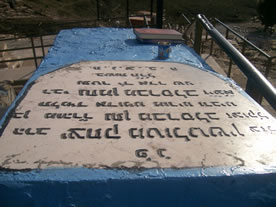
Alufim go to the Kever of Reb Yitzchak ben Reb Nason and recite the Tikkun Klali with Rebbe Nasons Prayer.
8.21.2007
8.17.2007
Erev Rosh Chodesh Elul
Alufim fast day and night and do Tikkun Hayesod by Kever Adino Hatzoni
Also new on site...
Hillulas of Elul, Tishray
Hillulas of the Tzadikim - List of all the days on the Hebrew calendar that are powerful times to do tikkunim.
Also new on site...
Hillulas of Elul, Tishray
Hillulas of the Tzadikim - List of all the days on the Hebrew calendar that are powerful times to do tikkunim.
8.02.2007
Hillulah of Rebbe Shimon Leviyah
Alufim go to the kever Rebbe Shimon bar Yochi and sing the Shir Bar Yochi by the Tzion
7.21.2007
Hillulah of the Holy Ari
Alufim Immerse in the Mikveh Hari and then go to the Kever of the
G-dly Kabbalist the Holy Ari
G-dly Kabbalist the Holy Ari
Hillulah of Rebbe Shimshon
Alufay Azus Dkedusha fast night and day then go to Kever Ari Hakadosh and Meditate on the Sod Etzbah Elokim on the Hillulah of the Holy Kabbalist Rebbe Shimshon Astripoly.
May Elokim avenge his blood from the defiled Ukrainians and Cossacks Ymach Shemam.
May Elokim avenge his blood from the defiled Ukrainians and Cossacks Ymach Shemam.
7.18.2007
Tikkunim by Adino Hatzoni
Alufim fast night and day. During the fast Alufim do Tikkun Hayesod by Kever Adino Hatzoni.
After the fast Alufim go to Mearas Shem Vaver, Binyamin Hatzadik, and Nachum Ish Gamzu.
Also New On Site:
Stories about the Holy Tzadik HaRav Yosef Dayan
Sources for Shmiras Hamachshava - Different quotes from various sefarim about guarding the mind from thinking impure thoughts.
It is Forbidden to Have Impure Thoughts - A summary of the laws of guarding the mind from impurity .
Stories about Tznius - Various stories about the important's of women acting and dressing modestly.
Teachings from Likutay Maharan
After the fast Alufim go to Mearas Shem Vaver, Binyamin Hatzadik, and Nachum Ish Gamzu.
Also New On Site:
Stories about the Holy Tzadik HaRav Yosef Dayan
Sources for Shmiras Hamachshava - Different quotes from various sefarim about guarding the mind from thinking impure thoughts.
It is Forbidden to Have Impure Thoughts - A summary of the laws of guarding the mind from impurity .
Stories about Tznius - Various stories about the important's of women acting and dressing modestly.
Teachings from Likutay Maharan
7.13.2007
Tikkun by Rebbe Pinchas ben Yair
Alufiy Azus Dekedusha fast day and night then go to Kever Rebbe Pinchas ben Yair recite the Tikkun Klali and do Zayin Hakafos while chanting Anah Bkoach.
Leshem Yichud to Recite Before Watching A Movie
Leshem Yichud to Recite Before Watching A Movie
Please print and hang in your Shul and on your TV
Please print and hang in your Shul and on your TV
I am herby willingly and readily preparing to bind myself to the Sita Acher. To give power and strengthen the klipot and the forces of evil that reside in the world, with the movie that I am about to watch. And may it be, that for the next two and a half hours I will unite myself totally and completely with the movie and bind myself to it in total concentration.
I am herby ready and prepared to be Pogem Anayim and gaze at immodestly dressed women for the next two and a half hours. I am fully prepared to be over on the Lav Doraysa of “Lo sasuro achary levavchem vachari anachem” I am also willing to transgress the Lav of “Heshumer Mkal Dvar Ra”. I am ready and prepared to be over a Deraysa of looking and thinking about women as brought down by all the Poskim, including but not limited to the Ramban, Rambam, Rabbanue Yonah, and Shulchan Aruch. I am also more then ready to be over on “Vehyisem Kedoshim” and “Kidoshim Tihyo”. I am also ready and prepared to look at the face of Reshaim even though the Holy Kabbalah warns that it is very damaging to the soul.
I am ready and prepared to funnel impure thoughts into my mind that will cause me to heaven forbid be Pogem Habris. If that will not happen, then I am fully prepared and ready to see Keri while I sleep. I am fully ready to contaminate my mind day and night with impure thoughts and recollections from the movie that I am about to watch. I am ready and prepared to spend countless Shmoni Esrehs, spaced out from beginning to end having the impurity of the movie overtake my mind. I am ready and prepared to have hiruray Znus with my Tefilin on.
I am herby making myself a vessel to fully receive and absorb all the impure essence of the defiled actors and producers that created the movie. I am ready for it to be integrated and impressed upon my body, soul and emotions. I am ready to absorb all the non Jewish culture and the bad traits of the seventy nations. I am willing and ready to bring into my mind confusion and Kfirot, I will confound my mind with wicked philosophy until I will start not believing in Hashem and the Tzadikim. I am ready and prepared to start uttering the vulgarity and slang that I will hear throughout the movie and fully plan on integrating it into my daily conversations. I am prepared and ready to adore and idolize the wicked Reshaim in the movie who wish to destroy Yisroel and whose ancestors committed gross murderous acts against our nation. I am ready to totally bind myself to their fake impure and empty culture and commit to live it, myself and my family.
I am fully ready and prepared to cause great damage and destruction in the Spiritual words. I am ready to cause great flaws in many of the various Holy Shemot. I am fully ready to create great havoc, in the worlds of Azilut, Briah, Yitzirah and Asiyah. I am ready to damage and mutilate all parts of my soul composed of the Nefesh, Ruch, Neshamah. I am ready to delay the arrival of Moshiach and to bring much suffering and poverty to the world.
I am ready to waste the next hours funneling impurity into my soul instead of spending the time studying Torah and doing Avodas Hashem. I am ready to lose all sensation and awareness of Kedusha as well as nullify my Emunah in Hashem and the Tzadikim. I am ready to strongly lower my ability to concentrate and learn Torah as well as damage my memory for all things Holy. I am also giving the Chitzinim a permanent share of all the Torah and Mitzvot that I do until the point when I do Teshuvah. I am ready to create demons and other negative entities that will steal all my substance. I am ready to further away my ability to find my Zivug and make her completely opposed and rebellious to me if I do find her. If I am married then I am willing to have my children considered semi Mamzarim since I will not be able to control my thoughts.
I will do all of the above willingly and gleefully sitting
relaxed in the sofa and enjoying myself to the utmost.
7.09.2007
Hillulah of the Ramak
Alufim immerse in the Mikvah and then go to Kever Haramak and recite Tikkun Haklali.
Hillel and Talmidim
Alufim do Tikkunim in Maras Hillel and his students.
Then alufim immerse in the Mayan of Shmayah Vavtalyon (Safsufa)
Then alufim immerse in the Mayan of Shmayah Vavtalyon (Safsufa)


6.18.2007
Hillulah of Rebbe Nachman Hurdanker
Alufim go to Teveriah to the Hillulah of the holy tzadik Rebbe Nachman Hurdanker and recite the Tikkun Klali.
On the way back Alufim do a Tikkun in Kever Rachel wife of Rebbe Akiva.
On the way back Alufim do a Tikkun in Kever Rachel wife of Rebbe Akiva.
Tiikkun of Rebbe Yehudah Fataya
Alufim fast day and night and do the Tikkun of Rebbe Yehudah Fatayah with Pidyon Pay Daled Tanasim.
During the fast Alufim go to Kever Adino Hatzoni and do the Yichud of the ARI for Tikkun Habris.
Then Alufim recite Tehilim by The Holy Ari and the Holy Ramak
and Immerse in the Mikvah of the Ari.
and Immerse in the Mikvah of the Ari.
6.15.2007
Hillulah of Yonason ben Uziel
Alufim go to the Hillulah of Yonason ben Uziel and recite the Tikkun Haklali with the prayer of Rebbe Nasson.
6.07.2007
Tikkun for Pgam Habris
Alufay Azus Dkedusha fast Mon Thr Mon Thr day and night and do Tikkun Zera Lvatalah from the Ben Ish Chi.
Idarah Rabbah by the RASHBI
Alufim recite the Idrah Rabba by the Kever of the Holy Tzadik Rebbe Shimon bar Yochi.
Alufim by Yehoyada Hachoen
Alufay Azus Dkedusha go to Kever Chuzpes Hmeturgemn and Recite the Tikkun Klali and Prayer of Rebbe Nason. Alufim then blow the shofer and do the Tikkun of 70 yells.
Alufim then go to Kever Yehoyada Hachoen and do 7 hakafos with Anah Bekoach then recite Az Yashir 7 times.
Alufim then go to Kever Yehoyada Hachoen and do 7 hakafos with Anah Bekoach then recite Az Yashir 7 times.
5.28.2007
Alufim at Rebbe Yehoshua Ben Chananya
Alufim go to Kever of R' Yehoshuah Ben Chananya and recite the Idra Zuta of the holy Rebbe Shimon Bar Yochai
Subscribe to:
Posts (Atom)

